Nigeria's food problem is a handling problem
Nigeria loses about 40 million tonnes of food a year to bad handling, not bad farming. Why that is hopeful, and what diaspora capital can do about it.
My family processed cassava. We were still hungry.
Gari, fufu, starch, with my siblings. I had been working since I was eleven, in my father's shoemaking, then my mother's tailoring. By fourteen we had moved from Lagos to Ifo and cassava had been added to the list. None of it was enough.
It was not just after-school work. The cassava came by truck from Lanlate, Igboho and further afield, and the trucks arrived when they arrived. Sometimes four in the morning. Sometimes daybreak. Sometimes evening. There was nothing to plan around. Whenever one came, somebody from the house had to be at that square, because the best of the load went to whoever was standing there, and what was left after it had been picked over was not worth carrying home. On market days we took the finished produce to the market, handed it to our parents to sell, then went home to dress for school.
Sourcing cassava should never have been that hard. Nigeria grows it in abundance. But a crop on a farm is not supply at a square. Tubers sat where the roads could not reach them, and worse in the rains. Farmers with no idea whether they could sell a harvest planted less of it on purpose, because growing a crop you will watch rot is a loss you choose.
So what we were short of was never the cassava. It was the chain around it: a way to get the crop off the farm, a buyer who gave the farmer a reason to plant it, any way to know when supply would come, and somewhere to keep it once we had it.
We turned tubers into food that other people ate, and it barely fed us.
More than thirty years on, that square is still the whole story. We are not short of farmers. We are short of almost everything that happens after the harvest.
The Bank of Agriculture puts Nigeria's post-harvest losses at around 3.5 trillion naira a year, close to 40 million tonnes of food. OTACCWA, the cold-chain body for West Africa, put 2025 losses between 3.5 and 5 trillion naira and named the cause without decoration: too little cold storage, and weak logistics between the farm and the market.
That is not a scarcity story. It is a handling story. Food is dear in Nigerian markets partly because so much of it dies on the way there.
I find that hopeful, and I mean that seriously. Handling is a management problem. Management problems yield to capital, systems and operators who know the trade. "We must grow more" has no obvious first step. "We must stop losing 40 million tonnes" has several.
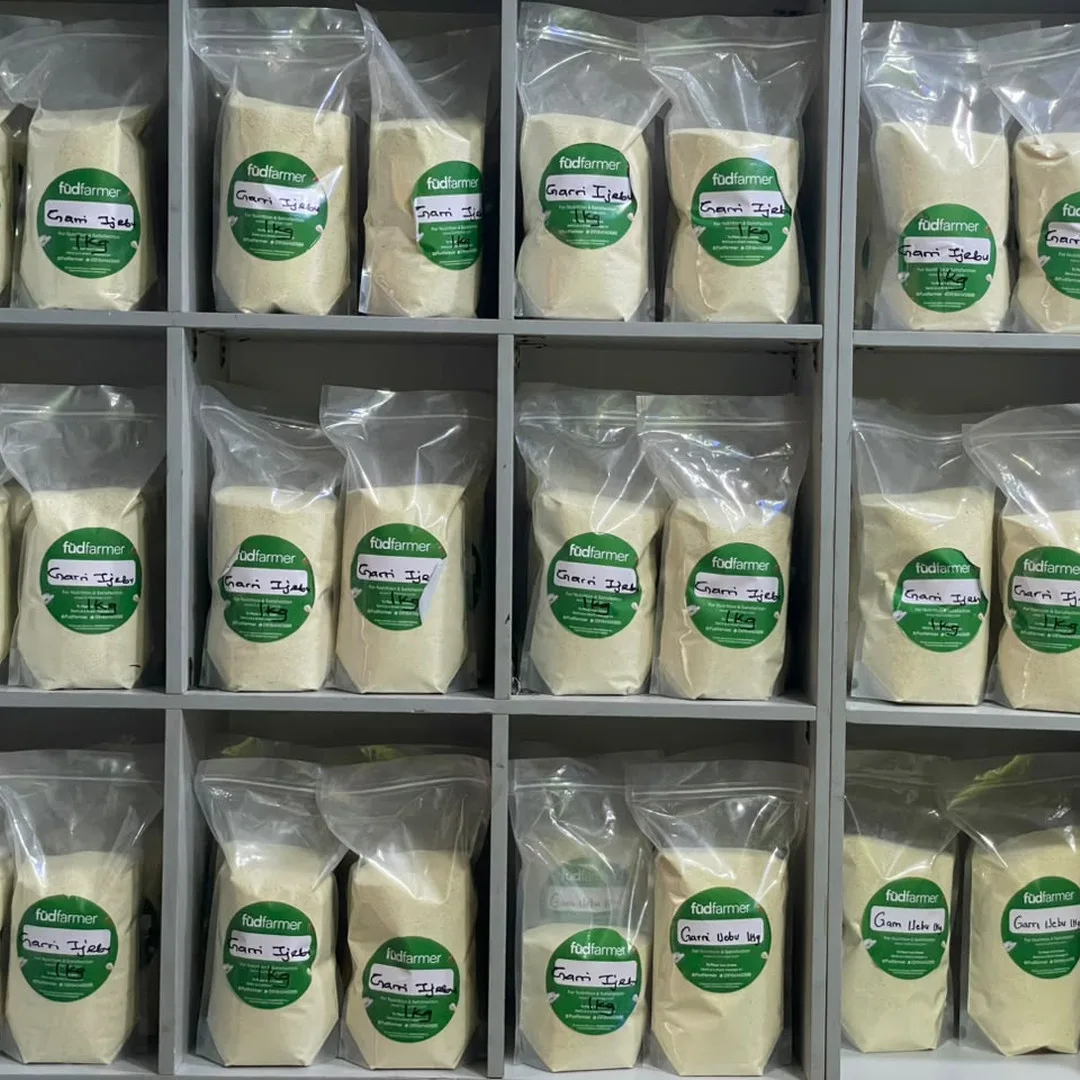
So I stopped writing opinions about it and bought in. I am an investor, not an operator, in three Nigerian food-security companies. One is Village Farms Commerce and Exchange, trading as Fudfarmer: a 40-tonne solar-powered aggregation hub at Ife Central, retail cold stores, farms at Akinlalu and Gbongan, and software tracking the farmers and traders who supply it. Cold chain running off-grid, in a country where the grid is the binding constraint.
Titilayo Adesoga and Iredumare Opeyemi run it. One is an accountant who spent six years in livestock. The other is a lawyer who is also a third-generation cattle trader. They are not tourists in this business.
Last week, I signed a letter of reference for their application to the 2026 All On Off-Grid Energy Challenge, which is offering Nigerian companies between 200,000 and 1 million US dollars in blended funding, with productive use of energy, cold storage included, among its focus areas.
Now the part I actually want to say.
Nigerians abroad sent home 21.8 billion dollars in 2025, on the Central Bank's own figures. Nearly all of it went to consumption: rent, school fees, hospital bills, funerals. Necessary, every naira of it. But consumption spends once. Infrastructure keeps paying, and it feeds people including those who are not related to you.
A country that cannot feed itself negotiates from weakness on everything else. That is arithmetic, not politics.
If one percent of what you send home each year went into the chain that moves food rather than the plate at the end of it, where is Nigeria in ten years?
- Post-harvest losses ₦3.5tn a year, on the Bank of Agriculture's figures
- Food lost 40m tonnes to handling, not to farming
- Remittances, 2025 $21.8bn sent home, on the Central Bank's own figures
Receipts
6 ITEMSWhat this entry is built on, itemized so the account can be checked rather than taken on trust.
- 01 disclosureI am an investor in Fudfarmer. Read the enthusiasm accordingly.
- 02 sourcePost-harvest losses of around 3.5 trillion naira a year, close to 40 million tonnes of food. Bank of Agriculture LEADERSHIP.NG
- 03 source2025 losses of between 3.5 and 5 trillion naira, from too little cold storage and weak logistics between the farm and the market. OTACCWA, the cold-chain body for West Africa PUNCHNG.COM
- 04 source21.8 billion dollars sent home by Nigerians abroad in 2025. Central Bank of Nigeria CBN.GOV.NG
- 05 recordCassava processing in Ifo, Ogun State, from age fourteen. Gari, fufu and starch, with supply arriving by truck from Lanlate and Igboho on no fixed schedule.
- 06 judgmentThat handling is a management problem, and that management problems yield to capital, systems and operators, is my reading rather than a finding.